Skip to content

Category: Random Thoughts

Thesis writing as method acting

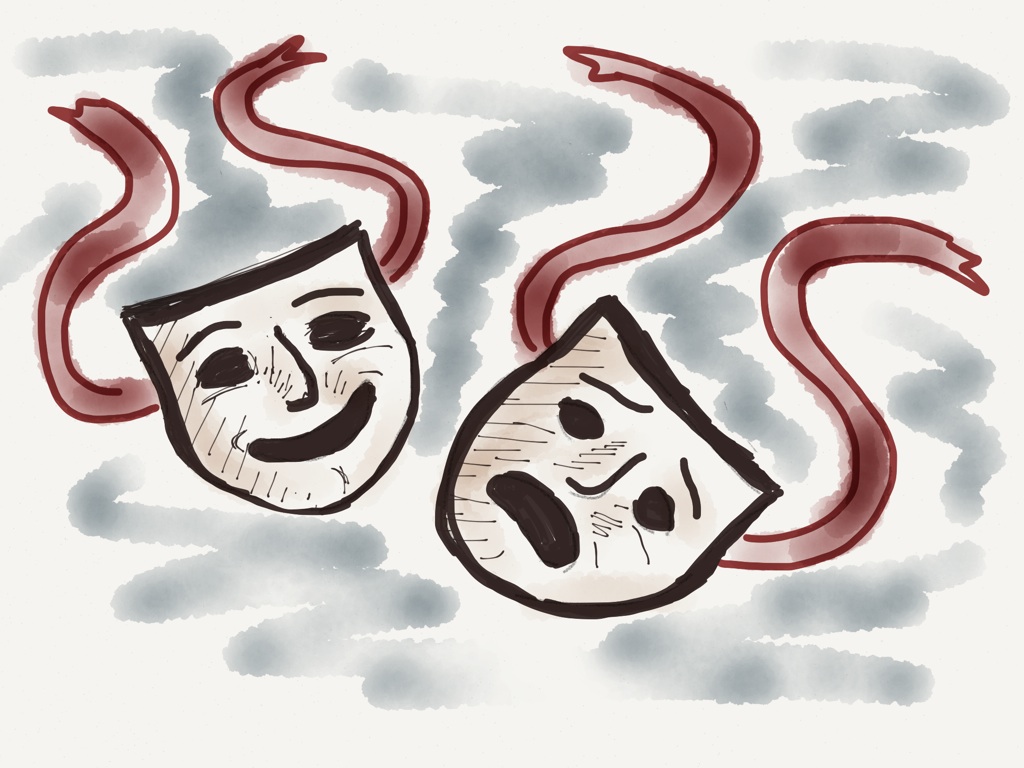
theater masks
by Iris


Most of my seniors are in the midst of writing their senior theses at the moment. For some, this is their first time doing any major library research (no kidding). For most, if not all of them, this is the biggest, longest, scariest paper they’ve ever had to write, and they can’t graduate until they’ve successfully completed it.

For students going on to graduate school, this is fantastic practice for their futures as scholars. For everyone else, it’s a really really big paper. And yet everyone is expected to produce work that demonstrates the student’s ability to behave like a young scholar — an almost-expert insider in the community of inquiry that is their major field.

This business of becoming an expert inside in a field is hard enough if you’re aware that that’s your task — it’s harder still if nobody has explained that this is what they want of you. And in my world of information literacy, it’s probably the single most important concept to get across. No evidence that they examine is intrinsically “good” or “bad” evidence. The question is, good or bad for what and for whom and in what context?

“To become an insider requires access to information that is valued and sanctioned with that [conversation] space…. This requires knowing about the sources of information that will inform practice, why they are valued and sanctioned by the community, how they are nuanced and the ways in which they can be accessed” (Lloyd 2010, 10).

I can teach advanced searching of the MLA International Bibliography until I’m blue in the face, but if my students don’t realize they they must first become aware of the norms and conventions of the conversation they’re entering, they have no functional way of selecting appropriate evidence, asking questions of it that are valued within the community, and asserting credible claims for their community.

In essence, I’m teaching these students, many of whom will not become PhDs in their chosen fields, to be method actors. See the scholar; be the scholar. Take on the tweed coat, revel in it, and take on the values, characteristics, and moods of that scholar as if they were your own. Only then will they be able to find, select, interrogate, and make appropriate use of the information that surrounds them.

——–

Lloyd, Annemaree. 2010. Information Literacy Landscapes: Information Literacy in Education, Workplace, and Everyday Contexts. Oxford: Chandos Publishing.

Comments closed

Having Survived Fall Term

And now, back to your irregularly scheduled librarian mundanity…

The last finals have be given, so Fall term is officially over. Fall terms are always intense, and this one was no exception. The difference this time is that I now have a couple of years of data all in LibAnalytics to look at. Turns out, I do over a third of all my teaching for the whole year in a two-week period in October. Yeow.

This year was also the year of “I wrote the paper, so now I just need some sources,” which is wrenching for both me and the student (particularly because the answer is often “there is no source that says that, so you’ll have to re-write your paper).

I’m also branching out in my projects, helping to run the new Emergency Planning task force. That probably deserves its own post at some point — it’s been a wild ride so far and I now know more than I thought I ever would about our electrical system and the Clery Act.

I ran through my limited energy a couple of weeks ago, so I’m really looking forward to the long weekend this week and the Christmas holidays coming up. I need some quality couch time!

Happy Thanksgiving, everyone. See you in December, most likely.

Comments closed

Motivation Follows Action

This has really been my first week of “summer.” School runs through mid-June here, and then there’s Reunion to keep us busy, and then sophomore portfolios to read and annual reports to write. Then I always need a week of down time before my brain can shift gears from Interruption Mode to Project Mode, so I spend that week sweeping up the crumbs from the school year, reading things, filing things, tossing things, and generally resetting my brain and my work space. Then comes the equally important week of vacation with my family during which my goal is to be as boring as possible.

Which brings us to this week. This week kicks off the summer projects. Some are really interesting and some are just necessary, but somehow I have to motivate myself to get through them all. So this year I’m trying a new approach: Motivation Follows Action. I say that all the time, and I find it’s true for me, so now I’m trying to put it into practice in a more systematized way.

Here’s the plan. I’ve posted my list of big summer projects on my wall in big letters. Each day, I have to touch at least two of them, no matter how minor the touch. There will be other things that crop up (there always are) so this leaves me plenty of wiggle room, but at least I’ll be making progress for sure.

So far, this is working well. So far I’ve pretty consistently thought, “I don’t really want to work on x but if all I do is figure out where the old file is on the server so that I can update it later, that’ll be a step,” and then find myself doing a morning’s worth of work on the project.

Motivation follows action so far. Fingers crossed that it continues!

1 Comment

Reasonable Expectation of Privacy, the NSA, and the value of metadata

My nephew still likes phones.
My almost-two-year-old nephew still likes phones.


A week ago, the general public didn’t know or care about metadata. Now, thanks to the NSA, it’s all anyone talks about. Meanwhile, the Supreme Court has already said that this kind of information collection without a warrant is fine because there’s no reasonable expectation of privacy attached to this type of metadata.

Using Metadata to Find Paul Revere

How much do people value information about the calls we make — the numbers we dial and the length of our calls? Quite a lot, it seems, even when they (supposedly) aren’t able or allowed to listen to the calls. You can do cool things with metadata about who contacts whom.

In libraries, we’ve know the power of metadata for a really long time. We’re in the business of creating, buying, licensing, and using metadata. And library vendors are in the business of charging us an arm and a leg for metadata, and of forbidding us from sharing their metadata. Their metadata is powerful. And above all, their metadata is theirs. Do not mess with their metadata.

Granted, cataloging and indexing produce rich, multi-facetted metadata, and the NSA is looking at “thin” metadata — nobody’s gone through the calls and classified them according to topic (we assume). This is the equivalent of author, title, and publication information. But perhaps telephone and internet companies will now be looking to library vendors for some pointers on making a tidy profit on all their metadata, especially now that we all know it’s not legally private after all.

It’s probably too much to hope that libraries will get better deals from vendors on the strength of an argument about how metadata isn’t private. The ultimate Open Access: nothing is private.

p.s. To any non-librarian readers: Libraries complete destroy your check-out records on purpose so that the government can’t ask us for it. Just FYI.

Comments closed