Yesterday was rather a trying day.
It all started during the night. You see, I was up half of it worrying about the apartment building burning down because one of my neighbors decided to throw one of her all-night parties, complete with banshee-like screaming (which is really her trademark). Anyway, this time she terrified me by setting fire to her kids’ art work which had been hanging on her apartment door. I could imagine her and her drunken friends using lighters on all sorts of other things, many of which could smolder for hours before bursting into flames. So I couldn’t sleep. (And yes, police were involved.)
Then I dragged myself to work to finish preparing for the classes I was supposed to teach. They were particularly challenging for two reasons: almost all of my preparation time during the week had been eaten up by impossible questions (which ate up hours of time and generally turned out to be unanswerable), and they were both for groups rather than classes, so there was no assignment to help motivate them to pay attention. I was also competing with their natural sense that paying attention to a library session on a Saturday was optional at best. So I had to come up with brilliantly exciting classes without the benefit of much preparation. Great.
To make matters worse, the organizer of the harder of the two classes (for the 20 new TRIO students) insisted that they be introduced to EndNote (along with getting a “general library introduction” and a tour of the library). Did I mention that all this was to take place in the space of an hour?
Well, I sat down and started listing all the things you need to know before you can use EndNote. You need the know the difference between a journal, an article, a book, and an essay in a book. You need know now that citation is important. You need to know which fields in the EndNote records are necessary and which are optional. And the list went on and on. So I decided to structure the whole class around citation as a way to introduce all this stuff, make them familiar with articles and books, and use the catalog and a database (since we could capture citations from those places into EndNote). By the end of the class, they’d be able to understand what EndNote does, but more importantly, they’d know what’s available to them at the library and some of the major distinctions between types of sources.
So here’s what I did. I took them on a whirlwind tour (which started 8 minutes late because they didn’t show up on time), then we got to work. We discussed Scholarly Communication and I highlighted citation as the key to following and joining in the conversation of scholars. Then we collectively came up with the goals of citation (which they figured was “to point readers to the words and ideas you respond to in your piece of the scholarly conversation”). I then handed out 3 books and 3 journals and charged each group of students with coming up with their own citation style and with justifying why they included the information they used in their citation and why they excluded the information they left out. Then we compared each of their citations with MLA, APA, and Chicago Manual of Style citations.
All of this took a lot longer than I’d figured (which I should have expected, but I’m only a baby instructor), and we were running late to begin with, so we were left with only 15 minutes for EndNote introductions (including the database and catalog searches so that we could capture citations). But all in all, I’m thrilled with the discussions I overheard while the students were creating their citation styles. They were arguing for and against including ISSN and ISBN numbers, discussing whether or not including the publisher’s name and the place of publication had anything to do with following the words and ideas of the authors, and generally teaching themselves a lot about the books and articles I’d handed out. What fun!
So maybe we didn’t cover very much in the grand scope of library research skills, but I kept remembering back to Randy telling me that students remember the experience first and the skills second. These students had a good experience. They were questioning me and each other, they were joking with me (about my status as the murderer in the Murder Mystery the library puts on for freshmen), and a few of them thanked me more sincerely than I’m used to at the end of a class.
So for next time, I’ll plan less. But I think I’ll include database searching as part of the process of looking at citations to figure out what you’re actually seeing in a result list. MLA International Bibliography would be good for this because it included book chapters as well as articles. I will also remember that this whole exercise (from discussing scholarly communication to discussing and comparing citations) takes 25 minutes if you’ve got 20 kids and 6 items to be cited.
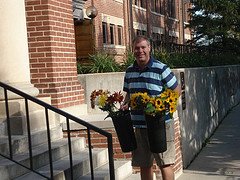
 When I got to the student center (where the coffee lives), the local florist was unloading his van full of flowers for the Friday Flowers. (Every Friday, students can buy flowers and stick them in each other’s mail boxes.) I don’t know when this tradition started, but I know it’s been going on for several years because my brother talked about them when he was in school here (he went here between 2000 and 2004).