Skip to content

Category: Libraries and Librarians

Data Management and the Humanities

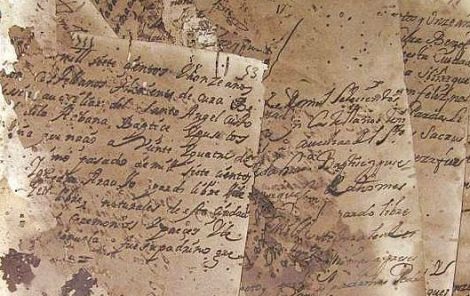
Humanities Data: Document fragments from church archives in Cuba

This morning my colleagues Kristin Partlo and Sarah Calhoun presented with me on data management plans (DMPs). The session itself was mostly a conversation about some example DMPs from the collection of successful DMPs that was recently released by the National Endowment for the Humanities followed by conversations about how we might talk to faculty (using this DMP template as food for thought). But from this conversation a few themes crystalized for me.

Why would humanists care?

I think we often hear that “sharing the stuff of my research with the world” isn’t a huge motivator in the humanities. I’m not sure how broadly true that is, but it’s true enough with enough people that it bears thinking about. And I have heard skepticism, usually in the form of “nobody else will care about this stuff I’ve collected,” so how do we address that?

Sometimes I think maybe it’s a matter of vocabulary, so talking about creating “an archive” or “a digital collection” might capture imaginations where “manage/share your data” won’t. Even talking about how a bibliography is a described dataset can be useful because humanists are very familiar with practices of collecting, organizing, and sharing bibliographic information, usually at the ends of articles, books, and syllabi, but sometimes independently. Humanists have actually been doing data management since forever when you think about bibliographies. In this context, we care about versions (editions), standardized and encoded “data fields” (so that other researchers know if you’re referring to a title of a chapter, article, or book, for example), durable URLs whenever possible… Bibliographies are rich with descriptive and preservationist practices that can help inform management and sharing of files and information more broadly.

I think another aspect of why Humanists might care involves thinking about sharing with the sympathetic collaborator that is your future self. Your future self will forget the ins and outs of where you put or how you named your image files, or what the columns on your spreadsheet actually mean. Our computers are chalk full of the stuff of our research — PDFs, draft versions, images, audio, video. Knowing where all of those things are requires management of all of that data just so that you can find things again later.

Learn through analogy with the known

Kristin talks about how the monograph is largely self-describing. It has title, author, and publisher information in predictable spaces. There’s the table of contents, often an index and bibliography, and things like introductions and conclusions that describe the book for you.

Then there are style guides and formal or informal glossaries that people adopt, and these serve to help make your data (“data” writ large) understandable and consistent for other readers.

These are things that are familiar, so it’s easier to point to these things and remind ourselves that we’ve already seen the usefulness of self-describing units of scholarship and of somewhat standardized best practices. Now we just need to apply it to the digital stuff we’re working with more and more these days.

And in the past, libraries and archives were the main places that managed the sharing of shareable humanities data (primary and secondary sources), but the sharing involved researchers traveling to those collections (humanities “datasets”) to use them. Now individual researchers can create collections, or use collections without physically traveling from dataset to dataset. But this also means that researchers now have more responsibility to do some of the description and standardization that libraries, archives, and publishers formerly did a lot of. So yes, the work feels different, but it’s built on the same principles that humanists already value.

Formal vs informal data management

One of the interesting themes of our session and all the other data-related sessions I attended is that people talk a lot about the data management requirements of grant-funded projects. Meanwhile, I haven’t supported that work at all, but I have helped quite a few people manage their own individual or collaborative non-grant-funded projects. And I really think that data management becomes much more alive and broadly useful if I think about how the best practices identified and codified by grant funding agencies help us think about best practices for regular, every-day digital life, right down to the daily action of naming and putting a file into a folder on my computer. For me and for the people I’ve worked with so far, formal DMPs are alien things that don’t intersect with my life and research. But the spirit and practices reflected in those DMPs? THOSE I care deeply about. So perhaps shifting language from compliance to best practices, and shifting focus from grants to every day organizational practices, perhaps these things can help make data management less of an alien object that only scientists and social scientists ever touch.

Comments closed

What does a reference & instruction librarian do all day?

I remember wondering what a reference librarian did all day back when I was interviewing for reference librarian jobs. I’d been an on-call/fill-in librarian at a public library, and I’d been a part time librarian at a small university, but I still couldn’t quite imagine what these jobs would be like in their full-time versions. Would I get bored waiting for people to ask me things? Or would I be swamped with reference questions and never get to do anything else? I was actually kind of worried…

Every so often I get interviewed by library school students, and usually one of the questions amounts to “What do you actually DO all day?” Since I just wrote this down for one such student yesterday, I thought I’d post my response here as well. It’s a pretty brief and general response, but if you’re curious, here’s a sketch of what I do all day.

Typically, my work divides up into 4 categories. First and foremost, there’s the liaison work, which involves meeting with faculty and students about their research needs, teaching classes, creating research guides, helping to staff the reference desk, and doing my best to keep up with both the pedagogical and the research trends in my departments. As one of a team of liaisons, another component of this work is to help steer people to their liaison when issues around library support and information literacy (practice or pedagogy) come up in random conversation. We’re always advocating each other’s work in this way.

Then there’s the work I do as part of the library as an organization. This involves participating in committees, task forces, and collaborations having to do with the running of the library or our work with St Olaf (we’re in a highly collaborative consortium together). For me, this work often revolves around areas like digital humanities support infrastructure, public service coordination between the various public services in the library, and coordination around the publicly available technology in the library. Other librarians have their own areas of expertise, but we all have work of this nature which is more internal to the library.

Then there is the work that I do as a member of our campus community in general. For me this involves working on the campus’ copyright committee, helping to coordinate the various support entities on campus that support digital humanities, collaborating closely with the Writing Center and the campus’ Academic Technologists, and (currently) serving on an implementation team for the college’s transition from locally hosted email and file storage to gmail and dropbox. Other librarians here have their own versions of this list, but we all get drafted into roles like these where our knowledge of information literacy and our relationships with the faculty, staff, and students on campus are called upon in service of a non-library project or function.

And finally, squeezed in as there’s time, there are professional activities that stretch beyond our campus and consortium. For me, this includes participating in an active online librarian society called the Library Society of the World, participating in local library networks, helping to edit an OA library journal called the Journal of Creative Library Practice, blogging here and there, and the occasional presentation or publication.

So there’s a sketch of my work. I like that at a small college I get to do more than one thing, and I like that the main theme of my work is working with people to help them solve problems and get around barriers. Most of my work, most of the time, is about enabling discovery and trying to find the best solutions to messy problems. And most of the time I get to do this work with engaged, inquisitive, smart people. Not a bad way to spend a career, I say.

4 Comments

The Digital Humanities and the Librarian

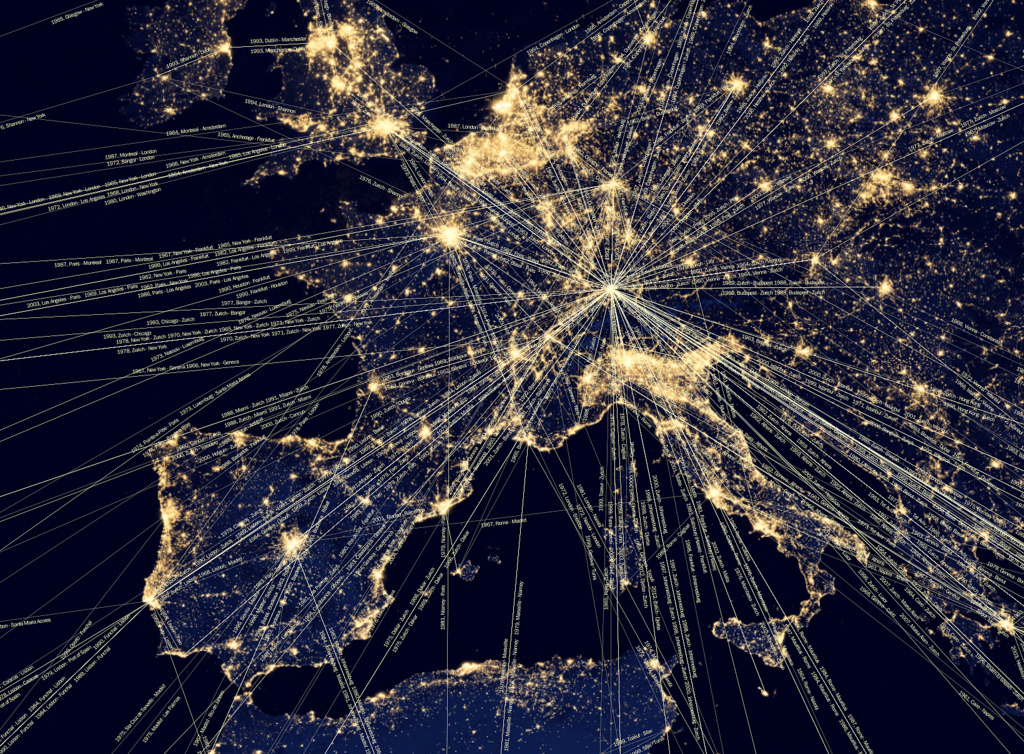
map visualization
Image by raph.ae/

Here at Carleton I’ve been tasked with helping to draft a proposal for a campus-wide digital humanities initiative and infrastructure. Being the librarian that I am, I’ve been spending a good deal of time reading the literature of the field in addition to investigating potential model programs at other institutions and pulling together what amounts to a SWAT analysis about our own institution. And one of the really interesting things in the literature of the field is how librarians are thought of (and think of themselves) in relationship to DH work.

There’s a sizable camp of  vocal “librarians should be full partners in the research” proponents. There are quite a few “provide good, quiet service and provide it well” advisers. There’s the “this is a new thing for librarians so we really need to figure out what we can do” camp. And there’s the “there’s nothing new under the sun for librarians so just do this” camp.

I fall somewhere in the middle of all this. There aren’t well-oiled mechanisms here or at many other institutions for humanists (as opposed to scientists) who want to do digitally inflected research, and yet this research is becoming more and more of an expectation in humanities fields. So in that sense there’s an awful lot to figure out, cobble together, and invent when it comes to supporting this research.

On the other hand, librarians have always studied and supported information use and dissemination, research methods, and scholarly communication cultures. We have always fought to make sure that intellectual freedom is a reality and that everyone has a chance to create new knowledge from the record of human thought. These things sit at the core of our profession — the core of our guiding documents and professional ethics.

A few years ago the humanities departments I serve became much more dependent on data and statistics as they engaged in scholarship, so I learned what I needed to know about finding, understanding, and using numerical information. Right now it’s becoming clear to me that the humanities research in my departments has taken on a decidedly spacial flavor, so it’s time for me to learn enough about spacial analysis and GIS to be conversant with the information and methods of the scholarship in my areas. And while I will never be a GIS specialist, basic familiarity is no more outside of my professional scope than leaning database searching was for the librarians who trained me. The stuff of scholarship changes, but our professional expertise lies first in understanding and facilitating how information flows and functions within scholarship, and it lies second in understanding the mechanics of locating the particular kinds of information that happen to be in use at the moment.

On top of all of this, the information that makes up the bulk of the data for humanities scholarship resides in various kinds of libraries, the “labs of the humanities.” The ties between librarian and scholar have always been particularly strong in the humanities. We geek out together over dusty codexes and digitized primary source collections, monograph browsing and frustratingly jargonless full-text article searching, bulky archival boxes and streaming video collections. Humanities scholarship has never been the solo enterprise that has gotten so much air time lately. Librarians and scholars have been there for each other through the ages, though the librarians’ role is often invisible to the broader community. The librarians aren’t listed as co-authors (and shouldn’t be!), but they do participate in very real ways in humanities scholarship’s inception, feasibility, creation, dissemination, and use.

So I think librarians and scholars function best when they are full partners with each other, and I think that “full partnership” often means playing a pretty invisible role.* I think that there is a lot that’s new that needs to be figured out, and I think there’s nothing new under the sun. But most of all I think that this is our world and our reality, and I think that we are equipped to tackle it, messiness and unanswered questions and all.


* There are some problems with invisibility, including things like being underpaid, over worked, etc. But that’s a topic for another post.


Here’s a bibliography of things that contributed to me thinking these thoughts.

Aarsvold, Nancy, Kasia Gonnerman, and Jason N. Paul. “Shaping the Roles of Academic Librarians to Meet Emerging Demands of DH Scholarship.” In Supporting Digital Humanities for Knowledge Acquisition in Modern Libraries, 44–65. Hershey, PA: Information Science Reference, 2015.

Maron, NL, and Sarah Pickle. Sustaining the Digital Humanities Host Institution Support beyond the Start-Up Phase. New York, NY, 2014.

Nowviskie, Bethany. “Asking For It.” Nowviskie.org, 2014.

Posner, Miriam. “No Half Measures: Overcoming Common Challenges to Doing Digital Humanities in the Library.” Journal of Library Administration 53, no. 1 (2013): 43–52.

Schell, Justin, Jennie M. Burroughs, Deborah Boudewyns, and Cecily Marcus. “From Digital Arts and Humanities to DASH.” In Supporting Digital Humanities for Knowledge Acquisition in Modern Libraries, edited by Kathleen L Sacco, Scott S. Richmond, Sara Parme, and Kerrie Fergen Wilkes, 234–252. Hershey, PA: Information Science Reference, 2015.

Vinopal, Jennifer, and Monica McCormick. “Supporting Digital Scholarship in Research Libraries: Scalability and Sustainability.” Journal of Library Administration 53, no. 1 (2013): 27–42.

What would you add to this list?

2 Comments

Tangible information literacy

Books HD
Photo by Abhi Sharma

One of the professors I work with a lot on campus has me join her American Studies Methods course a couple of times each term she teaches the course. The first time centers around three main questions:

  1. Where does your research question sit within the theory of the field?
  2. Where does the information you’ll need to explore your question sit within the archive of the field? (“Archive” here means the universe of sources useful within the field.)
  3. And how much of the archive of the field is necessary for your purposes?

Last year we had them mind-map their research questions onto the blackboard in among the major topics of American Studies research that they’ve been studying. Then we used these mindmaps as the basis for search strategies for primary and secondary sources.

This year for various reasons we didn’t do a full class on the information literacy of American Studies. Instead, I visited their class for the full class period and participated in their conversations about the two readings assigned for that day, pitching my participation to help draw out the patterns of information use in each of the readings.

What can we tell about the theoretical foundations of the author’s claim based on the bibliography? Who are the major voices the author claims as theoretical kin? What kinds of primary sources appear and how does the author use them? Why these sources and not others?

To help us grapple with the archive of these readings, I spent the morning hunting down every single primary and secondary source that Amy Kaplan used in her article “Manifest Domesticity” (American Literature 70.3 (1998): 581–606) and piled them up on the classroom tables. We had print copies of many of the early 19th century monographs and periodicals that Kaplan marshaled in her readings of the overlap between the rhetoric of empire building and of domesticity. What we didn’t have in print we had in digitized primary source collections, so I could print off a few pages of each. And of the secondary sources we had ready access to all but 2 of the books, one of which could have come over from St. Olaf if I’d planned ahead a little more.

So there we sat, exploring Kaplans scholarship while her archive lay there in front of us for direct exploration, manipulation, and interrogation.

I’m not sure what the students got out of the exercise. I hope they sensed the possibilities for their own research – that writing from 190 years ago is not exotic and out of reach and that the major voices in their field are represented here in our library’s collection. I hope they enjoyed holding paper and ink from the 1830s in their own hands. I especially hope that they sensed the vital research practice of mining other scholars’ bibliographies.

For me, I experienced wonder at just how much is accessible these days even in a curricular collection on a small liberal arts college campus. And I admit that it was a thrill to open those pages and see what other scholars saw, exactly as they saw it.

It certainly wasn’t a traditional library session, but I hope it was as useful. It was certainly fun.

Comments closed