Skip to content

Month: October 2006

A Wiki Library Web Site?

Jennifer over at Life as I Know It pointed me toward a new blog and a new idea, all in one post. The new blog is Library 2.0: An Academic’s Perspective by Laura Cohen (into my aggregator she goes….), and the new idea is that of making library web pages in the form of a wiki.

Here’s what Laura writes:

There are some people who rightly sing the praises of the Ann Arbor District Library because its site is blog-based. However, blogs are restrictive relative to wikis in that the typical user cannot create an entry but only comment on it. In the library context, librarians are in control of their Web site content and users can only respond. This is valuable, to be sure, but in terms of radical trust (a Library 2.0 buzzword), it falls short. […] The technologies exist to make library sites a joint venture, in which librarians and their constituencies work together to create an online presence that hears voices from both sides of the fence. In a way, this type of site would remove most of the fence.

This is an idea I haven’t heard before, and just based on that I’m inclined to say “Cool!” That’s my default reaction to ideas that bring together fun and usefulness, interaction, learning, and (hopefully) improved service. And I think this idea has the potential to be meet all of those coolness criteria.

However, my personal experience causes me to pause, just a little. Would the presence of wiki functionality actually increase participation? I’m not sure. Laura is not advocating a wiki-only approach. She mentions combining wiki and blog bases to come up with a more interactive environment. But the suggestion that a wiki is more interactive than a blog got me thinking.

I know that when I view a wiki, I am hesitant to change the content unless I either own the wiki or I’m one of a small group of people working on a collaborative project. Each page in the wiki looks and feels to me like a draft of someone else’s paper. I’m happy to comment on it and let the other person change the content, but I don’t want to go changing another person’s writing willy-nilly.

In fact, I’m even less likely to change a wiki than I am to post to a massive listserv, and for many of the same reasons. Call it shyness. Call it respect. Call it pathological inability to force myself on someone. Call it what you will, but the fact is that I’ve only written to a large listserv a few times in my life, and I’ve never changed any substantive content on “someone else’s” wiki.

Blogs, on the other hand, present no barriers to me. I’m happy to comment because I’m not fundamentally changing someone else’s work, but I can still add my two cents. And I create my own content secure in the knowledge that even if people disagree with me, all they can do is comment, so all the time I spend drafting will not be wasted. (Well, I guess wasted time could be argued… but we won’t go there now.) Not only that, but my content isn’t going directly to someone’s inbox unless they specifically want ME in their inbox. They can visit me or subscribe to me at will, but I’m not forcing myself on them.

So where does this leave me? I think my answer is still “cool.” I like the idea of including a collaborative and constructive research space where patrons can work with patrons, librarians with patrons, and librarians with librarians, and where everyone can contribute to the research experience. This collaborative space to include blog space for patrons who wanted to write and comment individually or in groups. Patrons should also have note-taking space via the library, citation managers, and the ability to tag and review resources that they find (see this earlier post for more on my wishes for a research portal). But as a library user, I’d also like the basic, predictable structure of an HTML page to organize my experience so that when I visit my library’s web page tomorrow I’ll still know where to find the catalog. What’s more, my reservations are based only on my own interactions with collaborative platforms, so others may have an entirely different take on it.

Ultimately, I end up with a similar reaction to Jennifer’s: I think the ideal research space would include a combination of a bunch of tools and formats which serve users and librarians and which, together, allow for constructive and healthy interaction.

p.s. What is the plural of “wiki”? I’ve seen “wikies” and “wikis” in use. Does it have an official plural? You’ll notice I scrupulously avoided plurals in this post even though that made the language a little wonky.

Comments closed
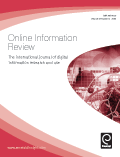
The Best Antidote to a Snowy Morning: Getting Published!


It was a dark and dreary morning when I got to work today to find a large envelope waiting for me. “Another publisher’s catalog,” I thought, as I opened it.

But it wasn’t a catalog. It was a stack of copies of an article I wrote with one of my library school professors and which has just been put out by Online Information Review. Suddenly the day doesn’t seem quite so dark and dreary.

Zhang, Jin and Iris Jastram. “A Study of Metadata Element Co-Occurrence.” Online Information Review. 30.4 (2006): 428-453.

p.s. This is also my 200th post!

6 Comments

Endeca Making More Inroads Into Libraries

Search and discovery is changing rapidly in libraries. Last January the North Carolina State University Libraries overlaid their ILS with an Endeca-powered search interface (here’s their catalog, and here’s their announcement from last January). This caused quite a bit of talk about dis-integrating out library systems and was a key feature in my research into the future of the catalog (see my list of related posts below).

Since then the NextGen Catalog listserv has undertaken to plan out the catalog of the future and WorldCat has gone open-access and web 2.0-ish.

And last night, ResourceShelf alerted me to the fact that McMaster has just overlaid their catalog with Endeca (Endeca press release here and McMaster’s news item here). If this trend continues I see three possible futures for our catalogs: our ILS vendors will improve their search interfaces, third party search vendors will get better and better at working with MARC and library ILSs, or (best of all) both the previous two will happen and libraries will have a real choice in search and discovery systems and functionality for the first time.

Related posts:

Comments closed

"But Why Didn’t They Archive Their pre-1990 Web Pages?"

Most of my co-workers spend most of their time working with juniors and seniors. They teach classes for these more advanced students, and their appointment slots fill up with students needing complex data, high-level scientific research, or rare primary sources.

I, on the other hand, have spent my time this fall almost exclusively with freshmen. In fact, so far this term I’ve only had two appointments with seniors. And because I’m the liaison to the English department, and because most freshmen take various incarnations of English 109, I end up teaching classes mostly for freshmen. Consequently, I find myself teaching an entirely different genre of class than my co-workers do.

In some ways, I have it easier. I don’t have to worry about those left-field questions about SciFinder Scholar, and I don’t have to worry about my status as a non-expert in whatever field the students are studying. Hey, they haven’t even chosen majors yet!

On the other hand, though, these are hard classes to teach. The research topics range far and wide when the only requirement is to “write a research paper,” so it’s hard to choose a resource for them to learn that will benefit everyone in the class. The students are also inundated with introductory sessions for academic services, so they often come in prepared to be bored. And besides, what do you leave out when they need to learn about database searching and catalog searching and finding encyclopedia articles and evaluate web pages… All this and they don’t know how to read a call number, let alone understand that you can’t look up journal articles in the catalog. I also don’t get to delve into the really fun stuff – the advanced searching techniques, the specialized bibliographies, the thrill of the hunt.

Not only that, but the “everything’s on the web” attitude is now compounded with a new assumption: everything has always been on the web. Last week I had a student looking for government information from 1985-1990. The state government agency in question had digitized documents back to 1993, but not to 1990. “Why didn’t they archive their older web pages?” the girl asked me, bewildered. It took me a minute to realize that she was asking why all the wonderful documents that they’d put up online prior to 1990 had been taken down! As I explained that Google has only been around since 1997, and that the web was pretty much unusable by the general public before 1995, this poor freshman’s eyes got bigger and bigger.

In the face of such confusion, I’ve decided that I have a new mission at work. I’ve stopped being jealous that my co-workers get to prepare their students for complex research projects, and I’ve begun to realize that I have a special place in the library: not only am I perfectly positioned to reach more freshmen than my colleagues, but I actually enjoy the special challenge that these students present. So I will focus on reaching absolutely as many freshmen as I can. I will prepare them so that by the time my co-workers teach them in their advanced classes, these students will not only know the basics, but they will be empowered to experiment freely and ask for help unabashedly. These freshmen won’t know what hit them.

Or maybe I just like to play god. Bwa-ha-ha-ha.

3 Comments