Skip to content

Category: Teaching and Learning

Plagiarism as a construct

copypasteA student recently spent some time tearing his hair out in my office because he was really really worried about the possibility that he might inadvertently plagiarize his sources and therefore fail his course. Meanwhile, a group of faculty in a recent workshop worried that their students routinely failed to quote, summarize, synthesize, and cite in proper measure. And every year our Information Literacy in Student Writing assessment project reveals that our sophomores do a good but not great job of knowing when their readers could use some more clues about their sources.

And on the one hand, everyone kind of nods and says, “Yeah, students these days.” But I think that we’re at least as much of the problem.

Lots of academic librarians (and disciplinary faculty) deal heavily in the world of plagiarism detection and anti-plagiarism instruction, but I think long habit and acculturation has made a lot of us feel like plagiarism is an objective thing with rules that everyone agrees on. You don’t use passages in your writing that other people have already used; you don’t pass off other people’s ideas as your own. If you do these things you are either ignorant or bad, or both. Done.

While college policies make it sound like a concrete thing called plagiarism is forbidden, in real life there are a whole lot of circumstances where those rules just don’t seem to fit very well, or where they’re applied one way in one classroom and another way in another classroom. What do you do about writing that results from thoughts developed over the course of class discussion or long conversations? What about the world outside of academic writing, where sharing and re-purposing may be the rule rather than the crime? What about all the genres of writing assigned in classrooms that mimic genres outside of academia and that therefore don’t have the same norms built around them?

Similarly, librarians and faculty either “care about citation” or “don’t care about citation,” but we also tend to link plagiarism and citation as almost one-to-one topics when really citation is about so very much more than just the presence or absence of plagiarism. The complex interplay between what counts as evidence and what counts as proper community participation lead to different norms even within academia. For example, in Lit studies, individual words are the evidence, so quoting individual words is every bit like reporting the response rates on a survey in the social sciences. In other disciplines this kind of quoting is frowned on as “over-citation” and a lack of synthesis. In computer science, there’ll be different rules for your classroom work and your industry work because using other people’s code functions fundamentally differently in an individual competence environment than it does in a development team. Anthropologists tend not to cite each other very much, and historians tend to value rich tapestries of citation functioning as almost a parallel narrative to the author’s work. These rules are not self-evident or consistent, but they are vitally important in their own contexts. Is it any wonder that students are confused?

So my job as a Disciplinary Discourse Mediator is to figure out what the rules are in my departments, why they are that way, and then to help students see the norms that they will be expected to conform to. More than that, my job is to alert students to the importance of figuring out what the rules are for any community they participate in, because the community will value these norms deeply but may express them vaguely (if at all), and when they do talk about they they’ll probably do so as if these are self-evident practices or even a matter of basic human decency.

Right now my strategy has been pretty subtle for the most part, framing any conversations about citation or academic honesty in terms of community norms and (when the situation seems to call for it) explaining some aspect of the connection between the norm and its community. For the rare people who are actually interested, I point them toward the work of Ken Hyland and all the various studies he did on disciplinary practices of quotation and attribution. But I always wonder if there’s something better I could do to usefully problematize the monolithic definition of plagiarism and its strangle-hold on the topic of citation while at the same time actually improving students’ abilities to detect and mimic the practices of the communities they participate in.


Comments closed

Result lists as a genre of writing

Idea – by me

I’ve been having a bit of an up-and-down teaching term this Fall — some classes going really well and some falling flat — but one thing that I’ve really enjoyed is that so many of the classes I’m working with are in new subject areas for me, or are taking different approaches than I’ve taken before. It’s felt like everything is new, an experiment, and if I look at it in that light I feel just a little better about the term as a whole.

One recent experiment consisted of actually speaking words in a lower level class that I’ve been mulling over off and on for years but have only ever uttered once in an advanced seminar several years ago. And I think it was ok. I think it was worth the few minutes of time it took, and I’ll think about where I can work it into other teaching I do.

The words? “Result lists are a genre like any other genre of reading. They may look different from tool to tool, but they all conform to certain conventions, and you can read a result list like a type of document, applying genre-specific reading strategies just like you’d approach an article differently than a mystery novel.”

The class I was teaching was of a type that I generally really enjoy: teaching students how to read instrumentally in order to do better research. And we talk about different kinds of reading: skimming, deep reading, and reading instrumentally. In lower level classes this generally involves me passing out a short reading (usually a newspaper or magazine article) and having students work together to generate lists of topics, key terms, and names associated with those topics by reading the article carefully. Sometimes I have them do this with the aid of a worksheet and sometimes I just do it with them on the chalk board.

And this time I added reading result lists as a type of reading that has its own specific place in a research strategy. Result lists come in many forms, but they will all help reveal the range of questions authors seek to answer that involve the search terms you use, patterns in authors or publications that revolve around the terms you used, and clues about the vocabulary of your topic which you can then take note of and use to revise your searches. They are highly condensed, jargonized reference “entries” that teach you a lot about patterns of publication, about vocabulary, and about where you can go next with your searching.

In this particular class I didn’t elaborate on speech genres in general, or explain that they’re “relatively stable types of utterances” that operate within a particular context and reflect “specific conditions and goals” (Bahktin 60). I didn’t even indulge in a geeky digression into the ways that “secondary” speech genres “arise in more complex and comparatively highly developed and organized cultural communication” (Bahktin 61-62). Does this remind you of scholarly communication pathways and norms? Disciplinary discourse conventions? Yeah, me too. But in a 45 minute class with first year, first term students I thought maybe Bahktin was a bridge too far.

Even so, understanding result lists in this way has really helped me, over the years, to get away from the frustration of “failed searches” and become far more comfortable with the idea that spending time opening results here and there and quickly gathering vocabulary and a sense of publishing patterns is one of the quickest ways to arrive at useful results, even if it at first feels like taking detours through a swamp full of weeds. I hope it will help those students, too.

Bakhtin, Mikhail. 1987. “The Problem of Speech Genres.” Speech Genres and Other Late Essays. Edited by Caryl Emerson and Michael Holquist. Translated by Vern W. McGee. Slavic Series. Austin: University of Texas Press. pp. 60-102.

Comments closed

Best Practices for Groups using Zotero

I was recently asked to write up some best practices for groups using Zotero, and I thought I’d share them here. While the language and specifics of these practices are all Zotero-centric, I’ve done very similar things with Mendeley and EndNote as well, though they don’t have standalone notes, so you have to make a well-named citation and use its notes fields to fulfill similar functions.

First off, it is worth it to pay for storage from Zotero. There are work-arounds using Box, but that adds a layer of complexity that I have seen go wrong when, for example, you have collaborators spread all over the place and not everyone is tech savvy or has library or IT support.

I’ve also seen people register a Zotero account and then share login credentials to that account with a group. This is not a good idea for a bunch of reasons. Everyone should have their own account and then be added to a group library.

With those two things as ground work, here are some things to consider as you launch a group project using Zotero. The larger your group or longer-term your project, the more these practices will matter.

Setting up the structure

  1. Create a space that serves as your “inbox” for new stuff, before it’s processed/corrected/tagged/whatever. That way you can go merrily along collecting collecting collecting, but not mess up the organizational structure or lose your unprocessed stuff in the giant pool of processed stuff. If it were me, I’d make my own personal zotero library into my inbox area, and only move things to the Group library once it had its PDF associated, metadata cleaned up, etc. Alternatively, you could have a tag that you associate with new stuff so that you can gather it all together and process it.
  2. In the main Group library, have a standalone note that describes the workflow of the group and defines how you are using tags, folders, and “related” items in this group. For example, some people use folders for procedural steps and tags for topic categorization, some people do the opposite, and some people do something else entirely. But this note will make it clear to the whole group how folders, tags, and “related” items function in this space.
  3. In the main Group library, have a standalone note for tag definitions. Name it something that will guarantee it’s at the top of an alphabetical list (like _TagDefs). Apply every tag to this note (so that it comes up whenever any tag is selected). In that note, list each of your tags and a brief definition so that everyone on the project knows what it means and how to apply it. Whenever you create a new tag, be sure to update this tag definitions note and then add that tag to the note as well.
  4. In each sub-folder in the Group Library, have a standalone note that describes what that folder is meant for.
  5. If you’re going to use tags systematically, I suggest UNCHECKING the preference that automatically gathers subject headings from databases, because these are all over the place and will clutter up your tag list. All the other check boxes on that main screen of the preferences help, but this one doesn’t unless you really only use one database/catalog and it has good set of subject terms.
  6. Plan on not having too many tags/folders. “Too many” is subjective, of course, but once you get scores of them they become very difficult to scan through and select. They should hit that sweet spot of functioning to gather together useful chunks of items rather than having only 1 or 2 items per tag/folder or having nearly all your items in a tag/folder. Novices to tagging tend to come up with too many, and constantly add new ones, which really doesn’t help with organizing a group library.
  7. It can be useful to have a way of tracking procedures, either using tags or folders. These would be like “needs ILL” or “follow up” (which I use for things where there’s a gold mine of a bibliography that I know I’m going to want to go back to and start looking up and saving relevant items from the references).

Saving/organizing items

  1. Save into your “inbox” space, however you’ve set that up. (Be aware that whatever folder is selected in Zotero, that’s where all your new saved items will go, so check this before going on a saving spree.)
  2. Check all the metadata Zotero pulled in when you save an item. Frequently there are capitalization/spelling/data errors that need to be corrected manually.
  3. If Zotero wasn’t able to pull in the PDF automatically, download and then drag the PDF in (and having the OpenURL resolver set up in preferences can help you with this — and if that didn’t sound like English to you, check out the instructions under “Making the “Library Lookup” option work like the library’s “Find It” button” in the top left-hand box on this guide for an example, though of course Carleton’s URL won’t work for other colleges).
  4. Once you’ve saved and cleaned up your item information, open the list of sub-items (the little triangle next to the item citation in Zotero) and right-click on the PDF, and then select “Rename File from Parent Metadata.” That way the PDF itself will have citation information in its file name, which saves headaches if you download it later on and end up with a million “out.pdf” or “1957ty3593.pdf” files on your computer.
  5. A single item can be saved to more than one sub-folder, which is far better than having multiple copies/versions of a single item.
  6. An often-overlooked function is the “related” function. This can link together versions of the same work, or an item with items it cites/is cited by, etc. In group work this helps other people see the connections that you’ve found between works. (It can be helpful to have a written definition of how people think of “related” so that, for example, someone doesn’t put all the books on cats together as “related” rather than just tagging them with the subject “cats.”)

So basically, the theme of all of this is to make it so that there’s explicit shared understanding of how to use the various functions, and then give every new item the TLC it needs in order to coexist with all the other items.

Have a favorite tip or practice? Leave it in the comments here!

1 Comment

Data Management and the Humanities

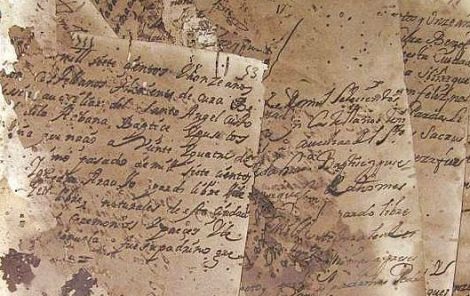
Humanities Data: Document fragments from church archives in Cuba

This morning my colleagues Kristin Partlo and Sarah Calhoun presented with me on data management plans (DMPs). The session itself was mostly a conversation about some example DMPs from the collection of successful DMPs that was recently released by the National Endowment for the Humanities followed by conversations about how we might talk to faculty (using this DMP template as food for thought). But from this conversation a few themes crystalized for me.

Why would humanists care?

I think we often hear that “sharing the stuff of my research with the world” isn’t a huge motivator in the humanities. I’m not sure how broadly true that is, but it’s true enough with enough people that it bears thinking about. And I have heard skepticism, usually in the form of “nobody else will care about this stuff I’ve collected,” so how do we address that?

Sometimes I think maybe it’s a matter of vocabulary, so talking about creating “an archive” or “a digital collection” might capture imaginations where “manage/share your data” won’t. Even talking about how a bibliography is a described dataset can be useful because humanists are very familiar with practices of collecting, organizing, and sharing bibliographic information, usually at the ends of articles, books, and syllabi, but sometimes independently. Humanists have actually been doing data management since forever when you think about bibliographies. In this context, we care about versions (editions), standardized and encoded “data fields” (so that other researchers know if you’re referring to a title of a chapter, article, or book, for example), durable URLs whenever possible… Bibliographies are rich with descriptive and preservationist practices that can help inform management and sharing of files and information more broadly.

I think another aspect of why Humanists might care involves thinking about sharing with the sympathetic collaborator that is your future self. Your future self will forget the ins and outs of where you put or how you named your image files, or what the columns on your spreadsheet actually mean. Our computers are chalk full of the stuff of our research — PDFs, draft versions, images, audio, video. Knowing where all of those things are requires management of all of that data just so that you can find things again later.

Learn through analogy with the known

Kristin talks about how the monograph is largely self-describing. It has title, author, and publisher information in predictable spaces. There’s the table of contents, often an index and bibliography, and things like introductions and conclusions that describe the book for you.

Then there are style guides and formal or informal glossaries that people adopt, and these serve to help make your data (“data” writ large) understandable and consistent for other readers.

These are things that are familiar, so it’s easier to point to these things and remind ourselves that we’ve already seen the usefulness of self-describing units of scholarship and of somewhat standardized best practices. Now we just need to apply it to the digital stuff we’re working with more and more these days.

And in the past, libraries and archives were the main places that managed the sharing of shareable humanities data (primary and secondary sources), but the sharing involved researchers traveling to those collections (humanities “datasets”) to use them. Now individual researchers can create collections, or use collections without physically traveling from dataset to dataset. But this also means that researchers now have more responsibility to do some of the description and standardization that libraries, archives, and publishers formerly did a lot of. So yes, the work feels different, but it’s built on the same principles that humanists already value.

Formal vs informal data management

One of the interesting themes of our session and all the other data-related sessions I attended is that people talk a lot about the data management requirements of grant-funded projects. Meanwhile, I haven’t supported that work at all, but I have helped quite a few people manage their own individual or collaborative non-grant-funded projects. And I really think that data management becomes much more alive and broadly useful if I think about how the best practices identified and codified by grant funding agencies help us think about best practices for regular, every-day digital life, right down to the daily action of naming and putting a file into a folder on my computer. For me and for the people I’ve worked with so far, formal DMPs are alien things that don’t intersect with my life and research. But the spirit and practices reflected in those DMPs? THOSE I care deeply about. So perhaps shifting language from compliance to best practices, and shifting focus from grants to every day organizational practices, perhaps these things can help make data management less of an alien object that only scientists and social scientists ever touch.

Comments closed