Skip to content

Month: April 2014

DASHcamp: Digital Arts, Sciences, & Humanities camp 2014

Two weeks ago, I was able to attend DASHcamp at the University of Minnesota. It was such a rich and useful day, both in terms of what I learned and also in terms of the people I met. None of us wants me to write down all the things I learned and thought about that day, so here are the highlights.

Data Management and Curation Profiles for the rest of us

Data management is an increasingly important (and often required) step in research. The idea is to describe your data, any decisions you made while collecting and using your data, and any tools needed if others are going to use your data. Two tools are:

  • DMP Tool
    A tool provided by the California Digital Library that helps researchers develop a data management plan.
  • The DCP Toolkit — Summary of Interview Elements
    Summary by Kristin Partlo of the “DCP Interviewer’s Manual” of the Data Curation Profiles Toolkit, developed by Scott Brandt and Jake Carlson of Purdue University Libraries, the Institute of Museum and Library Services and the Distributed Data Curation Center. http://datacurationprofiles.org/

We started trying to think through the elements in these tools from the perspective of humanities data. The group I was in discussed textual data (other groups discussed video, images, sound, etc). It turns out, this is a complicated discussion! We decided that we would need some description of the level at which the primary source material is encoded (did you code down to the paragraph level? the word level? the chapter level?). We got so stuck on describing our data that we didn’t get much beyond that in my group, but the discussion was fascinating nevertheless.

One important point that came out of this conversation was that we don’t have to start from scratch as we think about data management for humanities. We can draw from at least two bodies of knowledge: scientists and social scientists who have thought through so many aspects of data management already, and archivists who are trained in managing and describing the “data” of humanities.

One real Ah-Hah moment for me was when we talked about how to start the culture shift that would result in people documenting their processes and decisions as they do their research in the humanities. Someone mentioned that teaching bibliographic and file management is an important step in the process. I do that already! I talk with students about how to make their raw material (PDFs, citations, research note) retrievable and sortable, and all I have to do is mention casually that this is a humanist’s data management.

Conversation about the term “Digital Humanities.”

One interesting conversation during the day involved when it is and isn’t important to claim the term “digital humanities” for your work or outreach. One person remembered back when there was e-Science and wondered when Digital Humanities would just be “humanities” again. Most of us were only interested in using the term when it’s needed to claim resources. You’ll need it for many of today’s grants, for example, or to get some kinds of support from a campus.

Tools:

  • VideoAnt
    The University of Minnesota developed this simple video annotating tool, and it’s free and open for all to use. It was originally used to help professors respond to video assignments, but now it’s also used for collaborative work or whenever people want to have text associated with specific points in a video.
  • Git and GitHub
    I’d heard a few people talk about using one or the other of these tools as document drafting tools, so I was interested to see how to use them and what the appeal might be. The room was full of academic technologists, instructional designers, and librarians, and it was interesting to hear the various ways they knew to use the tools. Some create HTML-based tutorials and use this as their editing and publishing platform. People who work with data librarianship can apparently search for shared and useable data there. For me, I think it looks pretty overpowered for most document drafting, and it’s full of unfamiliar terminology for most humanists (pull requests, branches, forks, etc). I think the version controls in something like Google Docs is more accessible to most of the folks I work with, but it was great to get an inside view into a new-to-me tool.

So that was fun

I really hope they hold this camp again next year. And if they do I’ll make sure to register before I share the information, because I want a spot!

Comments closed
Situating Information Literacy Within the Curriculum: Using a Rubric to Shape a Program

For the past 5 years my department in the library at Carleton College have developed and engaged in an ongoing assessment project, the Information Literacy in Student Writing (ILSW) project. We published a piece in In The Library With The Lead Pipe in 2011, and this month Portal published our second article on the topic,  “Situating Information Literacy Within the Curriculum: Using a Rubric to Shape a Program.”

Danya, Heather, and I asked for and signed a license with Portal that allowed us to keep ownership of our copyrights, so I’m able to provide the full text of that article, but you should definitely take a look at the rest of the issue. I happen to know that Catherine Pellegrino also has an interesting article in this issue, for example.

Jastram, Iris, Danya Leebaw, and Heather Tompkins. “Situating Information Literacy Within the Curriculum: Using a Rubric to Shape a Program.” Portal Libraries and the Academy 14, no. 2 (2014): 165–86.

Abstract: This article reports on a pilot study to examine undergraduate students’ help-seeking behavior when undertaking library research in online courses. A novel methodology incorporating elements of ethnographic research resulted in a small, but rich and detailed, collection of qualitative data. The data suggest that the methodology has promise for future, larger studies on students in online learning environments. The article includes a detailed discussion of the methodology’s strengths and weaknesses, and offers recommendations for modifications that will improve the research design.

I should note that I’m the first author only by virtue of the alphabet. This was truly a group effort.

Please note: all figures are out of place by one position.


2 Comments

Locations of Literacy: Information Literacy (plenary panel at MnWE 2014)

Yesterday I was honored to be invited to join the opening plenary panel at the Minnesota Writers and English conference. The panel was on the theme of Locations of Literacy, and the other panelists discussed Cultural Literacy, Civic Literacy, and Environmental Literacy. I, of course, talked about Information Literacy. Here is a close approximation of the talk I gave.

MnWE
I drew the slides in the iPad app Paper by 53.

Before I get started, I just have to say that back when I was a writing center tutor myself, I never anticipated a time when I would address a room full of Writing and English folks, let alone speak on a topic as seemingly dry and boring as information literacy. And if you’d told me then that my favorite classes to teach would be on the epistemological and rhetorical underpinnings of citation styles… well, let’s just say that would have seemed too ridiculous to even warrant a laugh. But here I am; life is weird.

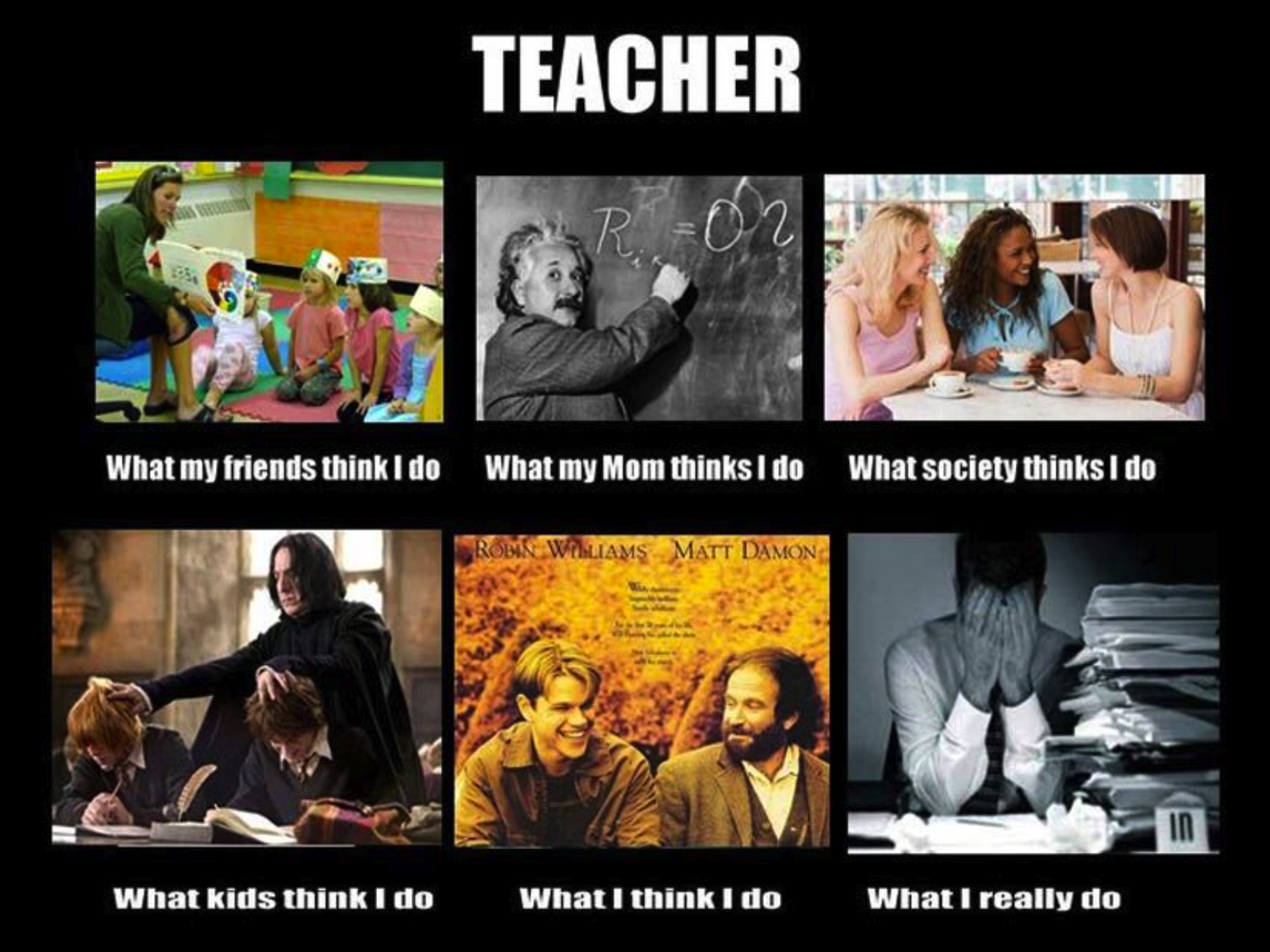
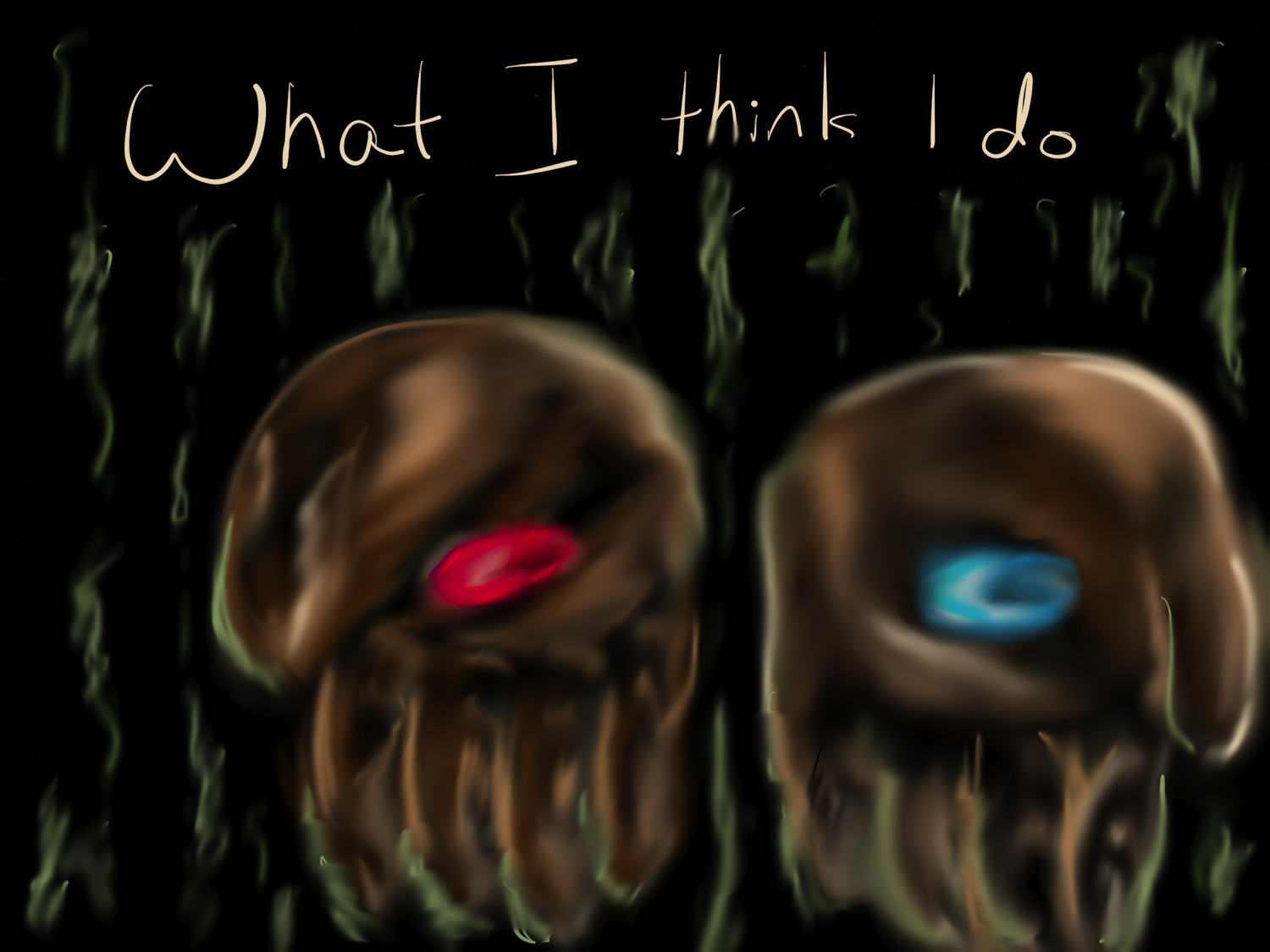
Anyway, do you remember that meme that was going around a couple of years ago? “What my mom thinks I do… what my kids think I do… what I think I do… I what I really do?” Here is one that resonated for me. Who hasn’t wanted to be that teacher from Good Will Hunting? And of course we all spend a lot of time looking like the poor teacher in that last panel.

Meme
http://teachersol.blogspot.com/2012/02/what-others-think-we-do.html

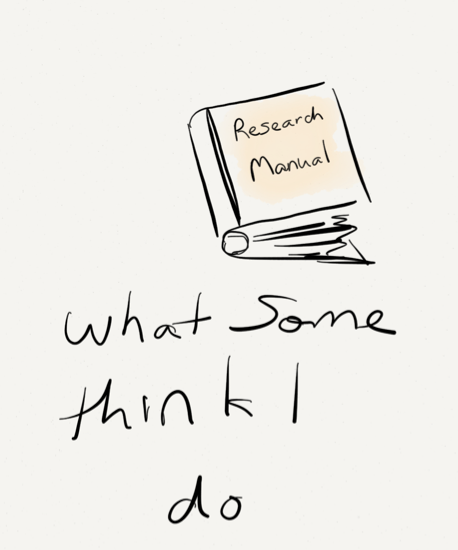
manualFishAs an instruction librarian, here’s what lots of people think I do, even other librarians: walk students through the Manual of Research Procedures. “Could you work this phrase or that module into all your instruction sessions?” Or “What do you tell all your students about how this or that back-end system works?” In this manual, if you turn to page 43 you’ll find Boolean operators, page 65 is Interlibrary Loan Policies and Procedures, and page 682 is on JSTOR options and techniques. If this really were my job I would be so bored, and a bored teacher is a bad teacher, so I’m really glad that this is not my job.
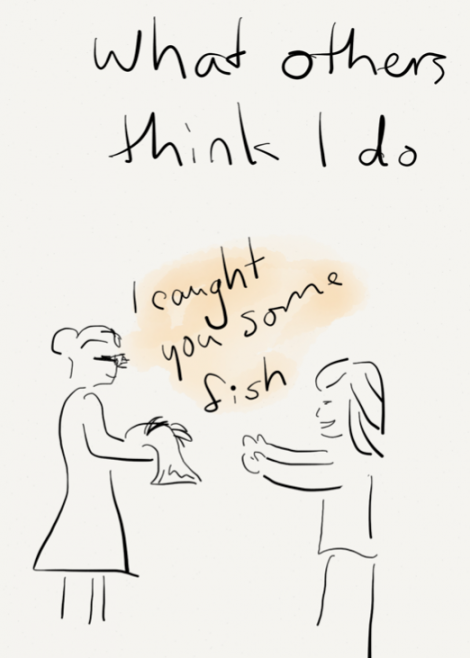
Another thing I get a lot is this is people thinking that we’re in the business of handing out answers. We’re all about teaching students to fish — helping them come up with strategies to use and resources to explore.

So what I think I do? I have this rather grand vision of myself as Morpheus from the Matrix. “Here, students, are two pills. Take the Red Pill and your life will never be the same again, the world of information will look fundamentally different, and there will be no turning back. Take the Blue Pill and you’ll probably pass your term paper.”


Morpheus

ReallyDoSo what do I really do? What I really do is teach principles and skills associated with information literacy, and I create and advocate for experiences in which my students can strengthen their information literacy habits of mind. (I couldn’t figure out how to draw that.)

So what is this “information literacy” thing that I’m teaching and advocating for? Well, first, it’s something that we’re all in the business of teaching – it’s just that I make it my focus. And it is located in the spaces between information.

But what does this mean?

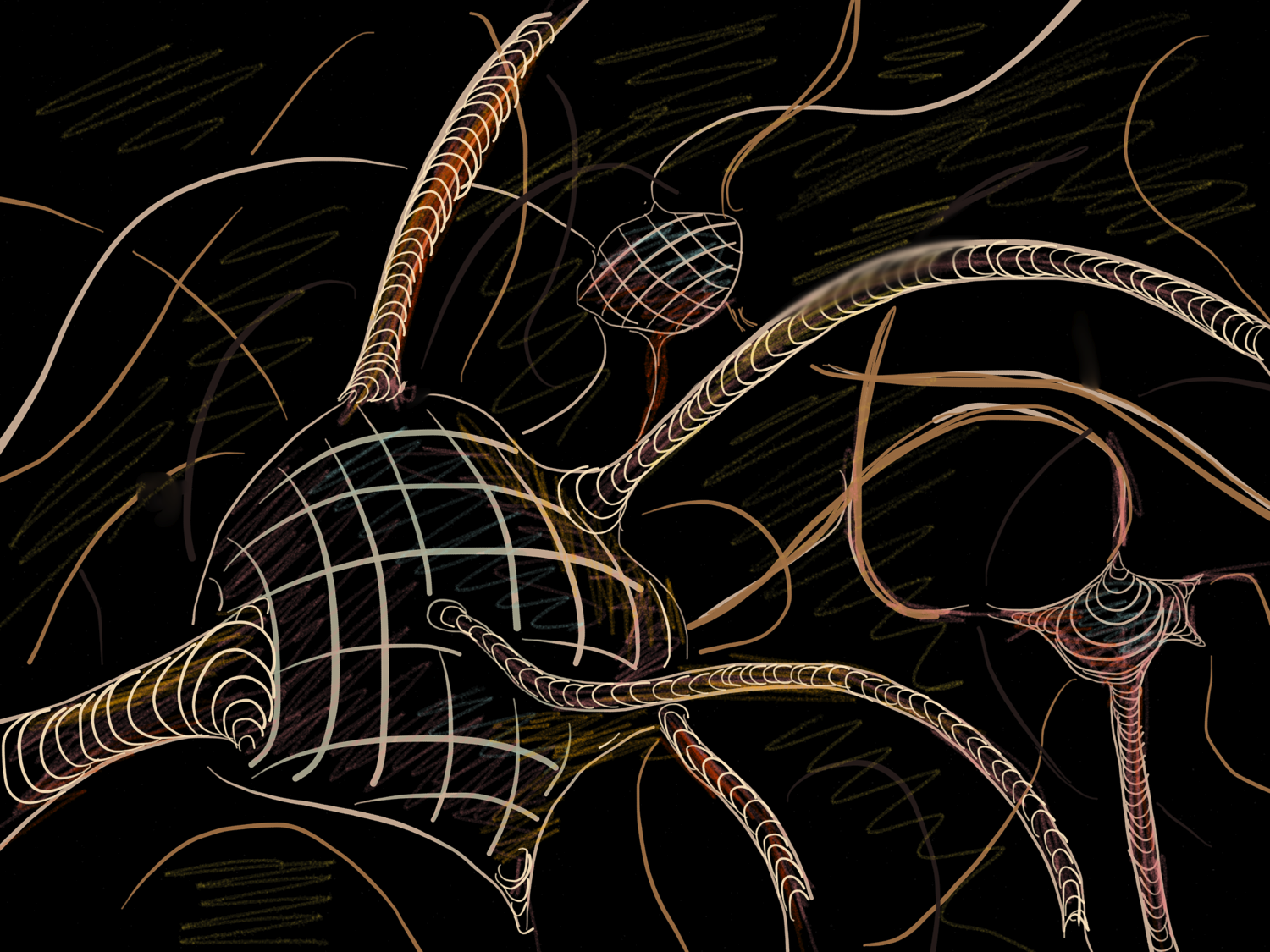
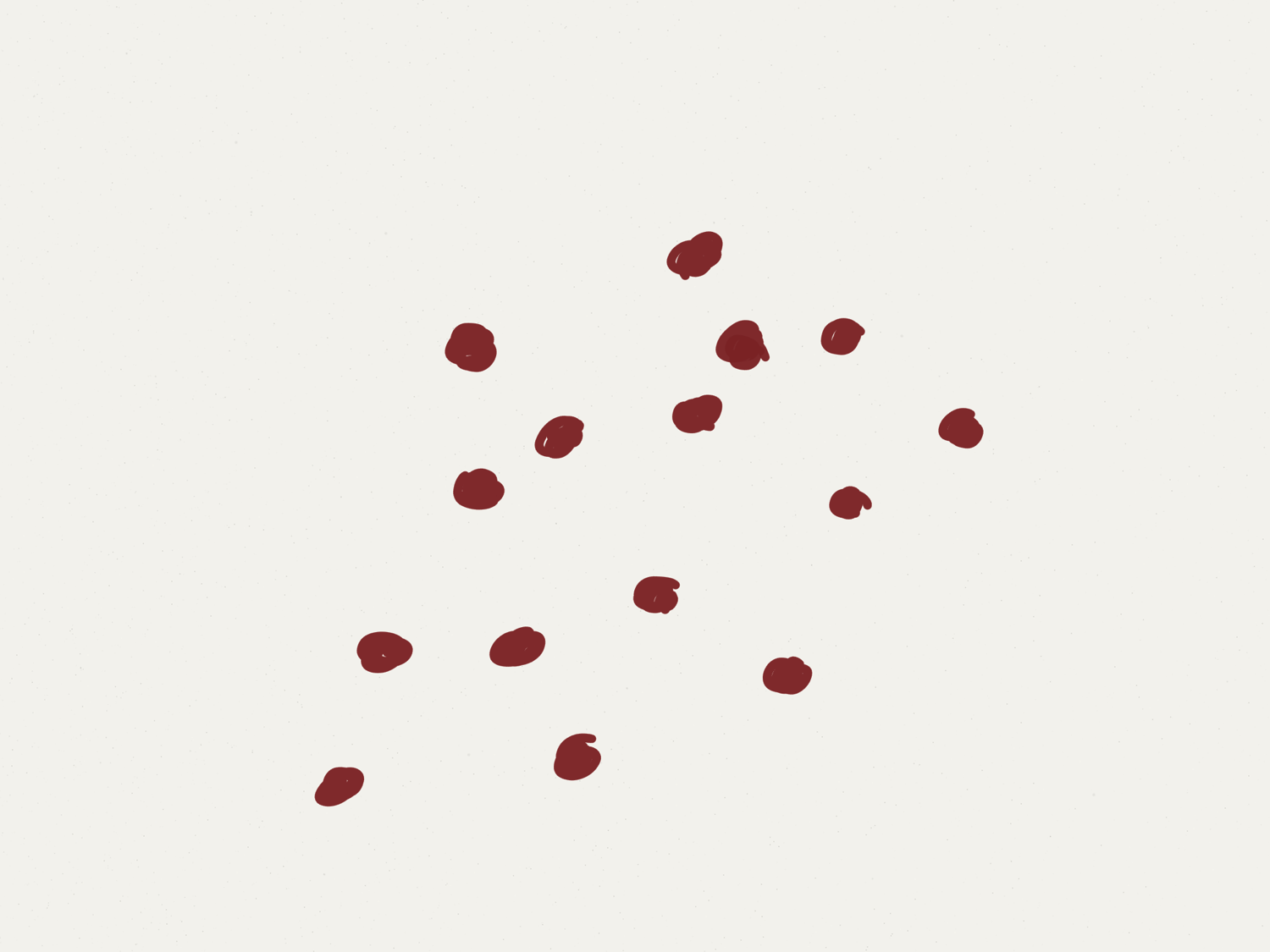
Think of a neural network.

Neurons

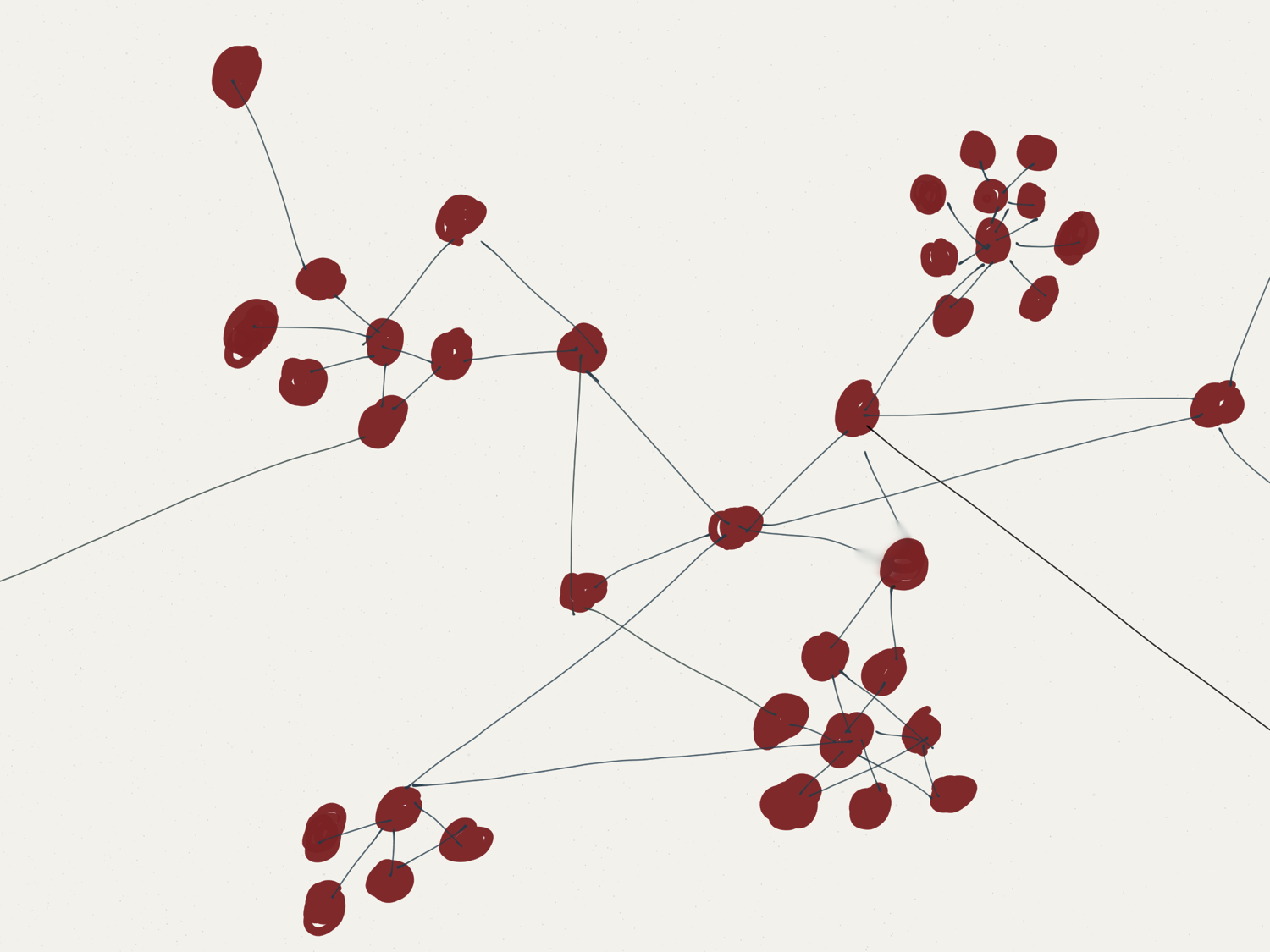
The neuron itself is fascinating, and I’m sure there’s someone somewhere out there who is making a single neuron his life’s work. But this wonderful neuron is nothing without its connections to other neurons in the context of a nervous system. It can fire and fire to its heart’s content, but if it’s the only neuron firing in this system, or if none of the other neurons are cooperating with each other, you’ve still got a dead body. No, it’s the cooperative, dynamic negotiation of signal and noise, impulse and understanding that animates the body. Just so, it is the discursive interplay between the information itself, the community’s values and practices, and effective participation in context-appropriate conversation — THAT is where information literacy sparks to life.

ThingsHere’s another way to think of it. Too often we concentrate on the books, articles, images, and other items — the stuff of research. Gather that stuff, cite it properly, don’t plagiarize, and you’ve got a research project! We have all seen those papers. “Here’s everything I know about x.” Or “here are a bunch of good sounding quotes that I like in this particular order.” But seeing research that way is not information literacy. The student may have arrived at these communicational non-entities using perfectly constructed, Boolean-laced search strings in exactly the right databases. The student may have evaluated that information beautifully and chosen exactly the right articles and books to cite perfectly in these papers. But this is not information literacy — neither you nor I am happy with this outcome (a point that Barbara Fister, whom many of you may know, made decades before I thought I arrived at it on my own, by the way, in her article “Teaching the Rhetorical Dimensions of Research.”) These techniques for finding and evaluating are the grammar, spelling, and punctuation of my profession: very important, for sure, but not sufficient.

NetworkNo, information literacy is about negotiating understanding within a context. It means being able to map out the community of inquiry and the various conversations that community is having. And then, it means being able to show that community where new knowledge fits. Parroting back other people’s conversations is not an effective conversation tactic in real life, right, so why should it work here? This is where you get to expand the conversation in very real terms.

But even this mapping is not yet enough. It helps us see the social and relational aspect of information literacy, but it doesn’t highlight the very real importance of the local culture of these conversations.

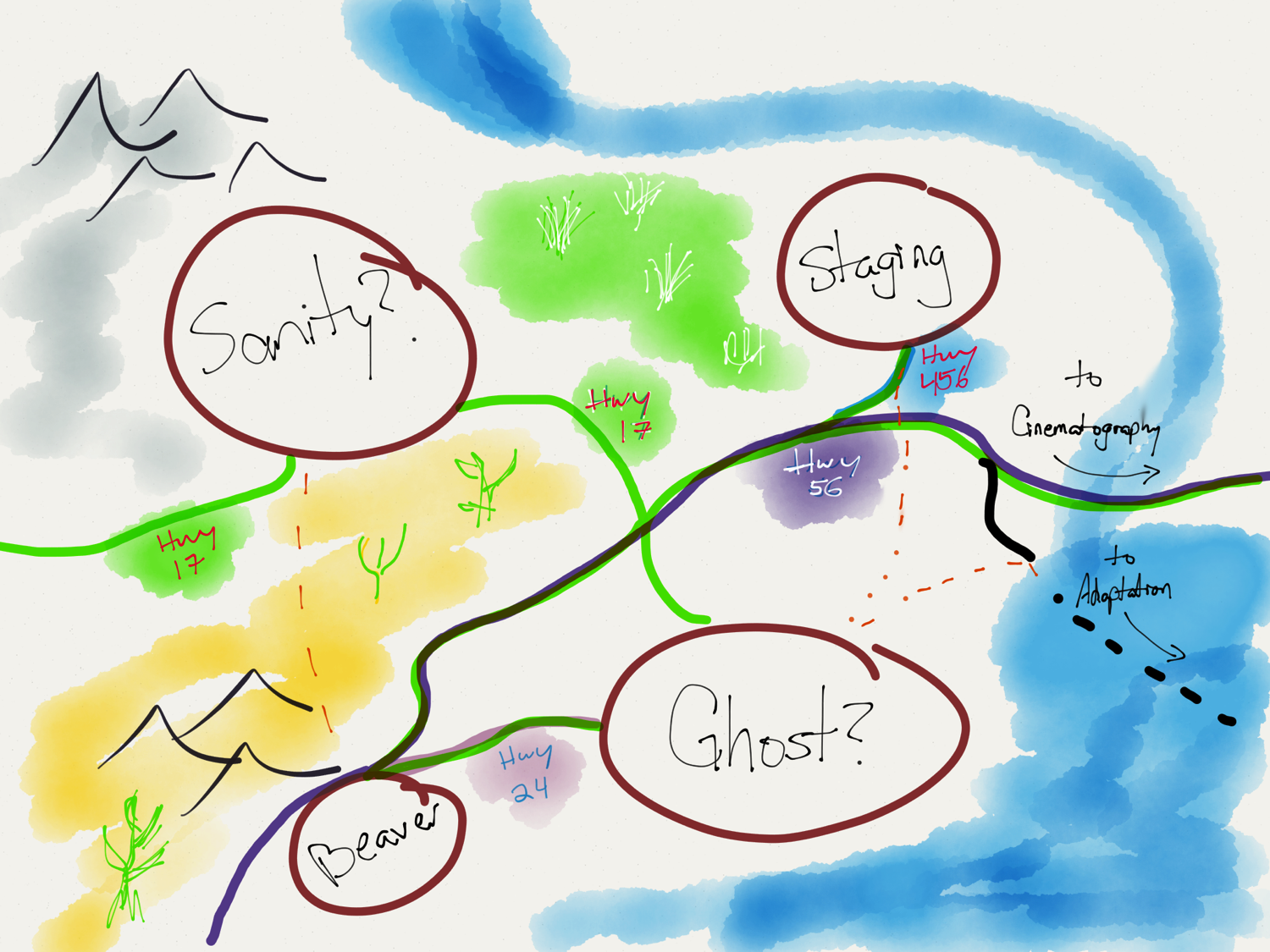
Here is a small section of the Continent Of Hamlet Studies.
Map
Each city-state within this content has its own laws, customs, and even language. So an effective participant in the city-state of Hamelt’s Sanity has to know things like what counts as evidence here? What are the rhetorical moves that matter here? Who are the important interlocutors? What is the vocabulary here? (And yes, the vocabulary matters to information literacy on many levels, not least because when you’re searching, computers can’t read. Computers only match letters in a row, and if you don’t use the letters-in-a-row that the rest of your community is using, you won’t be able to find what they’ve said.)

As Annemarie Lloyd says in her wonderful book, Information Literacy Landscapes, that information literacy is “the product of negotiated construction between individuals” (12). She says these individuals are “interacting with the artifacts, texts, symbols, actions and in consort with the other people in [given] context” (12). She calls this a “socially discursive practice” (15). You see why I think writing and information literacy go so well together?

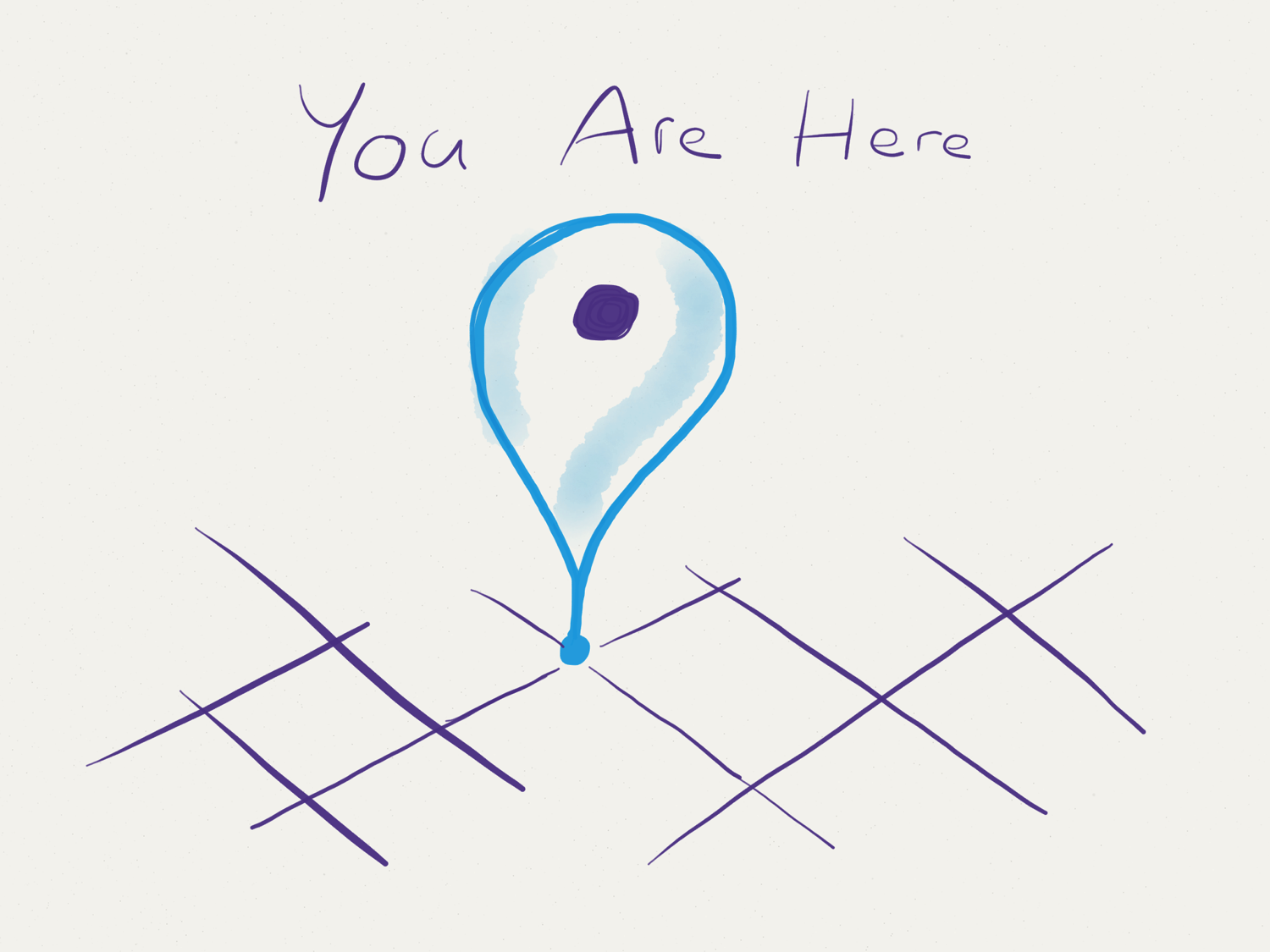
YouAreHereSo where is this literacy located? It is inextricably intertwined with communication. It is, as Rolf Norgaard says in his article “Writing Information Literacy,” “an inventional resource for the writing student, not merely a resources for supporting what has already been invented” (129). And it exists in the vital and dynamic connections between information and people.

So let’s all encourage our students to take the Red Pill. It’s a whole lot more fun.


——


Angala, Maria. “What others think we do #teachers #edchat [image].” Teacher Sol (blog). 19 February 2012. http://teachersol.blogspot.com/2012/02/what-others-think-we-do.html

Fister, Barbara. “Teaching the Rhetorical Dimensions of Research.” Research Strategies 11, no. 4 (1993): 211–19.

Lloyd, Annemaree. Information Literacy Landscapes: Information Literacy in Education, Workplace, and Everyday Contexts. Oxford: Chandos Publishing, 2010.

Norgaard, Rolf. “Writing Information Literacy: Contributions to a Concept.” Reference and User Services Quarterly 43, no. 2 (2003): 124–30.

5 Comments